The difference between innovation and automation is clear: One good communication can make a customer for life.

It is an indisputable fact that innovation drives progress. This was the big realization of nineteenth-century economics, leaving behind forever its fundamental theory that some things were inevitable and unchanging, like poverty. It illuminated education as the driver of upward mobility, something we take for granted today. This epiphany propelled the age of industrialization, then, calling it disruption, the information age, into this fantastic new world we live in.

All of it came down to one thing: an original idea. Originality in humans often springs from purpose or passion—an urge to create, express, solve, rebel, or explore. Marketing has come to rely on automation, but computers and AI don’t have intention or inner drive. They respond when prompted, and only then, because they lack selfhood entirely. Software and AI are developed to model language based on vast patterns of human communication. It can recombine, remix, and recontextualize in ways that feel novel—but every part of its “thinking” process is statistical prediction.

The keyword here is humanity. Every company is a brand. A successful brand is a metaphysical story that connects with people. The concept of Brand Personality was first conceived by the agency Young & Rubicam, where I was a division manager and a creative director. A strong brand personality can be the crucial distinguishing factor that creates preference for your brand and lifetime customer relationships.

It takes innovation, creativity, and experience to tell your story well across all the touchpoints in today’s marketing communication landscape. And a deep, human understanding of technology. AI can simulate innovation, and often convincingly. But a true original idea in the human sense—one that springs from personal experience, conscious curiosity, or emotional risk—is beyond its reach. Only human ideas can change conditions, and the success of any business is a work in progress.

To sustain sales, lead generation and brand identity, creating quality content in all forms is required. If marketers don’t constantly refresh available content, they run the risk of capturing an audience but not having anything relevant to say to them. That’s where we come in.

Breakout digital marketing requires the strongest force on earth. Imagination.

The power of ideas has always changed the world. But now, over 5 billion people use the internet daily. There are 1.3 billion websites that 80% of your customers research before making a purchase. 33.2 million businesses in the US are competing with you to make a sale. Coupled with the disruptive political and economic turmoil in the news every morning, and the complexity of digital marketing…how can you innovate with this pressure and come up with truly bright ideas?

First, consider the best use of your valuable time. Tracking a digital ecosystem is like trying to catch the wind. It takes an enormous amount of time to understand the current state of technology and even more time to patch it all together into what we marketing people call a “tech stack.” Even then, there are hundreds of solutions: many are misleading and don’t deliver what they promise, some are outright scams, most require advanced technical expertise, and all waste your efforts and money.

It takes time to be brilliant. You can spend that time and money trying to understand the opaque world of digital marketing and putting it all together. Or, just use the best resources now without the struggle, extra personnel, excessive overhead, and demands that keep you from what you want to be doing. Our expertise is making the complex simple to put creativity back in your hands. Spend time using resources to your best advantage, not just gathering them.

The marketing landscape has changed more in the past few years than in the last fifty. We help clients develop integrated marketing communications to reach and influence individuals in their target markets with one voice across rapidly changing media and devices. Our business experience is broad, and our clients have included some of the world’s great brands.

There is one critical element of digital marketing AI can’t provide. Human ingenuity.

Innovation is essential in digital marketing. It’s the lifeblood of any successful digital campaign because of staggering competition — 1.1 billion websites online. Over 85 percent of consumer and business buyers conduct online research before making a purchase. The trick is getting them to find you and then converting a view into a sale. Not everybody can fit on page one; not everyone can convert views to sales.

According to the Wall Street Journal, businesses estimate that they will lose between 20% and 40% of their Google-generated organic traffic as AI search iterations of the search engine continue to roll out. Another recent study found that 82% of buyers chose a brand they were already familiar with, often discovered through search, highlighting the importance of strong brand recognition and visibility.

All surveys indicate people crave trustworthy online sources that can help them make informed purchase decisions. As technology continues to evolve, the demand for accurate and relevant information will only increase. Costs are rising. Leading edge creativity is required. This requires innovation, often not wholly available in-house. Talent, overhead, and continuous training are expensive — that’s where we come in.

We are the nexus that makes technology and humanity work together.

We use AI extensively in digital marketing to enhance critical aspects of the process. While AI can process vast amounts of data and identify patterns, it lacks the spark of human ingenuity. It can’t truly innovate. Without human input, AI is a tool that replicates existing patterns and trends rather than creating something unique and new. Ultimately, the most powerful AI systems will be those that collaborate with human creativity, and that’s our expertise.

We combine the strengths of both to unlock new possibilities and solve complex problems. By combining an in-house and an external team, we create marketing strategies that are data-driven and creatively compelling.

BLAIRCOMM provides leading-edge marketing services that enable companies to engage potential customers from generating the lead to closing the sale. Our work has driven business for some of the world’s great brands as well as small and mid-market companies. All connected in the cloud for 24/7 management. No learning curve. No additional overhead. No extra personnel. Simple. Outsmart your competition; don’t outspend them.

Success requires not only the best brand message but the confidence it gets received.

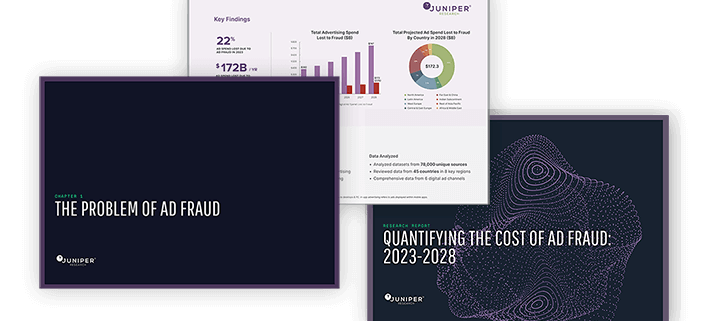
Ad fraud is any attempt to deceive digital marketers for financial gain. It is one of the biggest issues facing digital marketing today. We reduce ad fraud with transparency along with advanced mitigation processes. That means reliable performance measurement is transparent about bots and their impact on your results. You can trust BLAIRCOMM to handle your digital marketing. We make technology and humanity work together.

Ad fraud is often overlooked; below are some examples.

Made For Advertising Websites: These exist to poach ad revenue and account for up to 10% of programmatic spending. Scammers can use them to generate thousands of fake clicks on an ad, or fake visits to a website.


Click Bots: Research shows these make up 14% of all clicks in most digital marketing. Click fraud tricks you into thinking real users are interacting with a website, ad, or app. It cost marketers $84 billion in 2023.


False Email Open Rates: Estimated to make up 20% to 90% of all clicks and come from automated bots. Most bots come from email security software. Microsoft and Apple have it built in.


Non-Human Traffic: Traffic bots accounted for 67% of all internet traffic in 2023 and companies spending $10K per month on Google Ads are estimated to be losing approximately $12,000-$15,000 each year.


Ad Stacking: A type of mobile ad fraud in which multiple ads are layered on top of each other in a single ad placement. While only the top ad is visible to the user, a click or impression is registered for every ad in the stack, costing money for fake impressions or clicks.