Any agency can create campaigns that fade. We create ecosystems that never sleep.

We’re out to reframe the entire conversation about what marketing is supposed to do. Not by competing on price, creativity, or service, but on a fundamentally different philosophy of value. We offer an unfair advantage over the competition: a smarter infrastructure that makes it all work together. This ecosystem learns. It gets more efficient the longer it runs. It lasts far beyond campaigns to become a predictable growth engine. Stop renting attention and start owning it.

Traditional marketing was built around campaigns — a burst of creative energy, a big idea, a launch, then decay. The creative had a shelf life. Audiences got fatigued. You’d start over. It was episodic, expensive, and depended on interruption. Any agency today can do that. But the old model has given way to always-on creative engines. Brands that can respond to culture in real time and win outsized attention. That comes from a well-designed digital marketing ecosystem that never sleeps.

Most companies are still in campaign mode — because that’s what they know, and that’s what vendors keep selling them. Today, the campaign era is over. We can show companies a compounding, permanent growth engine and prove we are offering something genuinely transformational.

The critical insight is this: creative inside an ecosystem plays a completely different role than campaign creative. Instead of being the centerpiece, creative becomes the fuel. It feeds the machine. And this changes everything about how you think about it.

You need modular creative — assets designed to be remixed, tested, and iterated, not admired as a finished piece. You need a steady stream of signals the algorithm and audience can respond to, not one big swing. The question shifts from “Is this idea brilliant?” to “Does this asset serve the ecosystem’s goals?” This means creative longevity becomes a design criterion, not an afterthought. You’re not asking, “What’s the big idea for Q3?” You’re asking, “What creative infrastructure, content pillars, and asset libraries will still be generating value in three years?”

Traditional ad agencies create messages for fleeting fame. We create perpetual systems for growth that last.

Large agencies tend to sell visibility and one-off outputs. But a well-designed, expertly managed digital marketing ecosystem consistently delivers higher, more measurable, and more compounding ROI than expensive, agency-driven campaigns. That’s our value; it’s what we do.

As consultants, we build coherent, strategic systems. The result is not a short-lived spike in attention, but a durable growth engine that continuously attracts, converts, and retains customers. At less than half the cost, you gain a living marketing system—not a temporary campaign that fades as soon as the spending ends.

In 2026, digital marketing is no longer about isolated tactics or polished creative—it is a complex, data-driven growth framework that functions as the central nervous system of modern business. Its success requires deep technical expertise, business judgment, and hands-on accountability.

We operate closer to the digital strategy, the core data, and the execution, making decisions based on performance—not internal agency incentives or bloated processes. That level of leading-edge precision and ownership is critical in an environment where overpromising partners and misaligned tools can be both costly and ineffective.

A digital marketing ecosystem is not a single platform or channel, but an integration of high-intent, performance-driven tools working together. It delivers consistent messaging and personalized experiences across the full customer journey—from awareness to conversion. We can select, connect, and manage these systems with discipline and a degree of expertise that most agencies have to hire outside contractors to ensure every component serves a clear growth objective.

Introducing the future.

Introducing the future, where everything you finally figured out has just changed.

Your audience has always been a moving target, but now it may not even be human. AI is driving consumer sales, businesses, and a stock market boom like never seen in history. If you are struggling just to keep up, you’re not alone. But companies that fall behind will be left behind. Below are some of the changes to the marketing ecosystem this past year.

Authentic Content Grew in Importance. This began with Google’s dramatic change over two years ago. It prioritized the most authoritative source for a user’s search query. This reenergized battle-tested marketing strategies pioneered by advertising icons like Young & Rubicam. Brands relied more on real people, including reviews, photos, and customer videos, which became trusted content. Micro-influencers with engaged audiences outperformed big-name influencers. Authentic voices helped build trust — the advertising revolution of the 1960s.

AI became core to practically every part of digital marketing — no longer just a nice-to-have. The tools are widely used to create content, optimize ads, and automate campaigns. It added the ability of personalization at scale — tailoring websites, emails, and campaigns to individual behaviors in real time. It also spawned a brand-sameness.

Hyper-personalization became the new normal. Generic messages lost effectiveness in 2025 — customers expect brands to tailor experiences for each one of them. This has become a key competitive advantage, increasing engagement and conversions, but comes with a steep learning curve as much of the technology is new.

Search marketing changed irrevocably in 2025. It is now voice, visual & AI-driven. SEO shifted from keyword-focused tactics to intent, conversational queries, and content quality because AI can now summarize information at the query level, requiring new optimization techniques. SEO is now obsolete. Generative Engine Optimization (GEO), is a still-evolving marketing and SEO science focused on making your brand and content appear in answers generated by AI search engines. If you don’t understand this technology, digital campaigns will fail.

Privacy-first data strategies became central. As third-party cookies faded and regulations tightened, first-party and zero-party data — data users willingly share in exchange for value — became a priority for valid analytics. Transparency and ethical data use became trust and loyalty builders. No marketer can now afford not to be a nerd.

Omnichannel experiences took center stage. Instead of siloed campaigns. Marketing strategies integrated email, social, search, website, personalization, and offline touchpoints. Customers now expect to experience consistent messaging regardless of how or where they interact with brands. This integration is a company’s strategic brand message, and missteps can be costly in money and lost business.

Analytics & ROI tracking got smarter. Data measurement has evolved with AI so marketers now need to predict campaign performance and accurately attribute ROI across channels. New tools provide deeper insights into customer journeys and which touchpoints drive conversions if you know how to use them.

This presents a moment of opportunity to become an architect of modern business growth. To do this, you need a partner who helps you connect authentic storytelling with hard data, breakout technology with a lower cost, and has a more extensive skillset than your competitors. We make creativity accountable by integrating leading-edge strategy, data, and digital execution in ways that build confidence and demonstrate effectiveness to strengthen your role as a business driver.


Success requires not only the best brand message but the confidence it gets received.

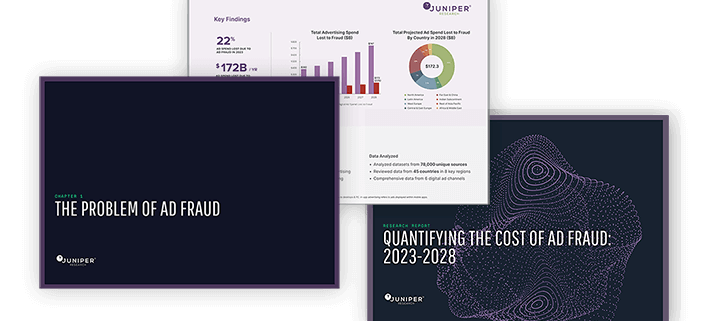
Ad fraud is any attempt to deceive digital marketers for financial gain. It is one of the biggest issues facing digital marketing today. We reduce ad fraud with transparency along with advanced mitigation processes. That means reliable performance measurement is transparent about bots and their impact on your results. You can trust BLAIRCOMM to handle your digital marketing. We make technology and humanity work together.

Ad fraud is often overlooked; below are some examples.

Made For Advertising Websites: These exist to poach ad revenue and account for up to 10% of programmatic spending. Scammers can use them to generate thousands of fake clicks on an ad, or fake visits to a website.


Click Bots: Research shows these make up 14% of all clicks in most digital marketing. Click fraud tricks you into thinking real users are interacting with a website, ad, or app. It cost marketers $84 billion in 2023.


False Email Open Rates: Estimated to make up 20% to 90% of all clicks and come from automated bots. Most bots come from email security software. Microsoft and Apple have it built in.


Non-Human Traffic: Traffic bots accounted for 67% of all internet traffic in 2023 and companies spending $10K per month on Google Ads are estimated to be losing approximately $12,000-$15,000 each year.


Ad Stacking: A type of mobile ad fraud in which multiple ads are layered on top of each other in a single ad placement. While only the top ad is visible to the user, a click or impression is registered for every ad in the stack, costing money for fake impressions or clicks.